The High Income Threshold Just Moved. Has Your Contract Template?
As of 1 July 2026, an Australian employee earning one dollar more than $190,100 a year has no automatic right to bring an unfair dismissal claim at all.
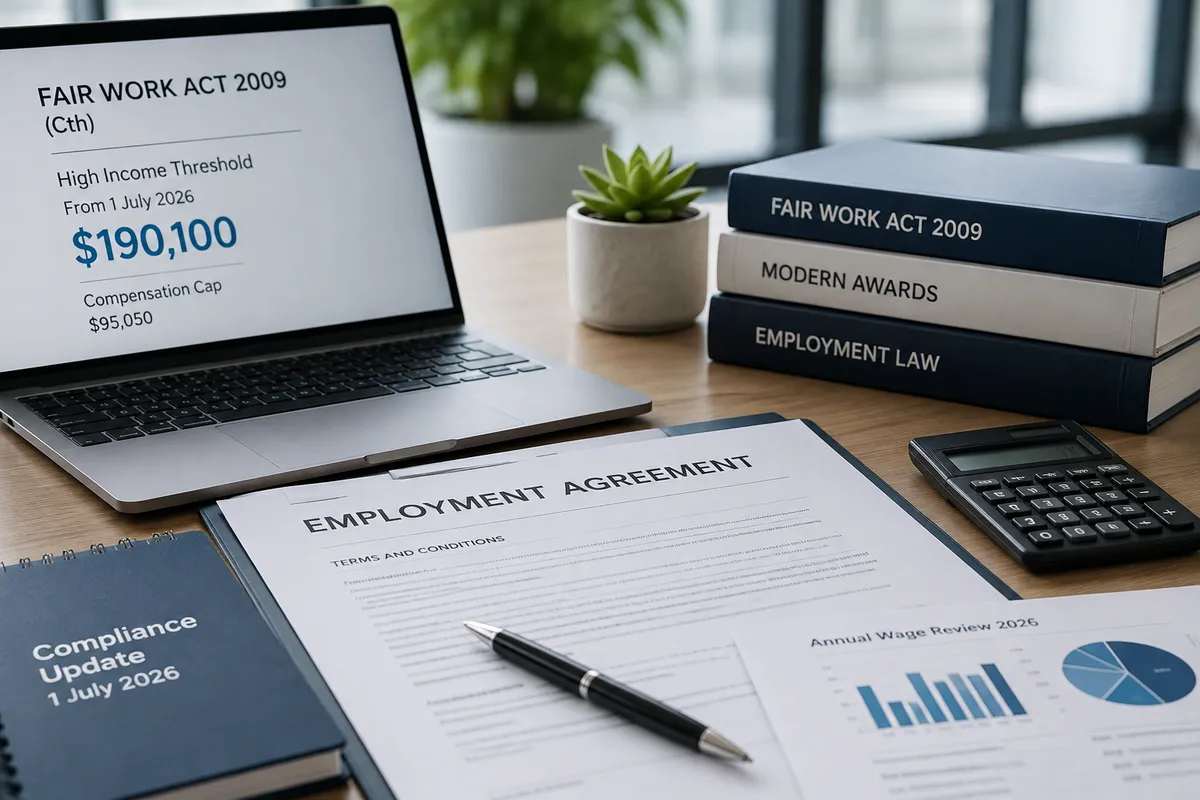
The Fair Work Commission's Annual Wage Review 2026 decision, handed down on 2 June 2026, lifted the high income threshold from $183,100 to $190,100 with effect from 1 July. This threshold, set under section 333 of the Fair Work Act 2009 (Cth), determines whether an award free or agreement free employee falls within reach of the unfair dismissal provisions in section 382. Employees covered by a modern award or enterprise agreement remain protected regardless of earnings. Everyone else must sit below the threshold on the date of dismissal, calculated by reference to earnings as defined in the Act, not simply base salary.
The compensation cap for successful unfair dismissal claims also increased, from $91,550 to $95,050, being half of the new high income threshold under section 392(6). National minimum wage and modern award rates rose at the same time, with the minimum wage moving to $1,004.90 per week and award rates increasing by 4.75 per cent. Employers who still reference the old threshold figures in contracts, policies or above award calculations are working from a document that is already out of date.
These figures move every year, but the operational consequences are rarely reviewed with the same regularity. A contract drafted two years ago that excludes an employee from redundancy entitlements based on a stale salary figure, or a restraint clause pegged to an outdated threshold, creates ambiguity that favours nobody in a dispute. New Zealand has no equivalent salary based threshold. Personal grievance rights under the Employment Relations Act 2000 (NZ) apply irrespective of income, a structural difference that matters for any business operating across both markets.
Annual indexation is predictable, but most businesses treat it as background noise rather than a trigger for review. Halcyon HR Consultancy works with Australian and New Zealand employers to build contract and policy frameworks that are checked against current thresholds as a matter of routine, not rediscovered during a dispute.
Reach out at https://halcyonhr.com.au/